On going to the grave of my great-grandparents one of the first things I did was to reach out and touch the cold granite headstone, bearing their names and dates. Thomas boastfully stated that he would not believe unless he touched the risen Christ, and John records of Jesus that, “(Him) we have looked upon, and our hands have handled.” The consummation of marriage is a deeply physical act, as is birth, and death. A gardener must touch, smell, and handle the earth and its produce. To be human is greatly connected with the physical; it’s unavoidable. A flourishing human does not live merely in the mind, and spirituality expresses itself in action.
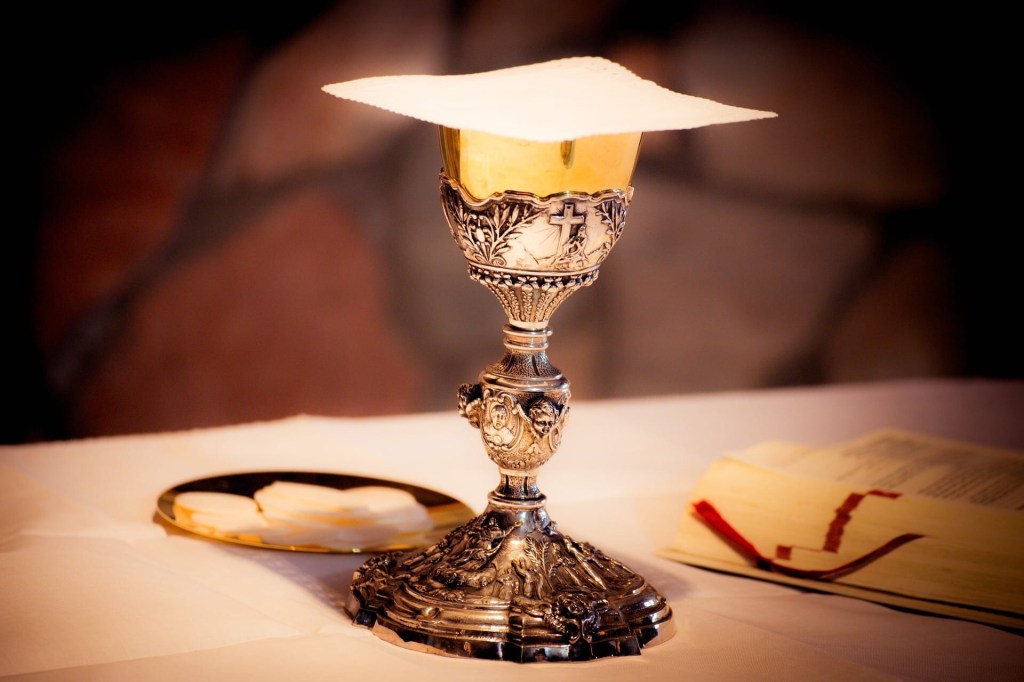
At the heart of the Christian worship is communion. An overemphasis on the word preached to the exclusion of the expression of physically partaking in the body and blood of our Lord, in communion with the family of God, is to devalue the humaness of people. We are not simply minds or souls. The body will rise again. Of course the welfare of the soul is of higher value than merely the tent of flesh, but the soul shines through the body, making its actions of sacramental worth.
We can touch the eternal. The bread and the wine prove to us the reality of the incarnation; God made physical. A sermon is a purely spiritual affair. You must listen with your soul, which is a good thing, but it is through the ritual combination of the spiritual meaning of the sacrament with the physical action of communion that the Word takes on flesh (whether in a symbolic sense or some kind of actual presence) once again.
 Reflective Wanderer