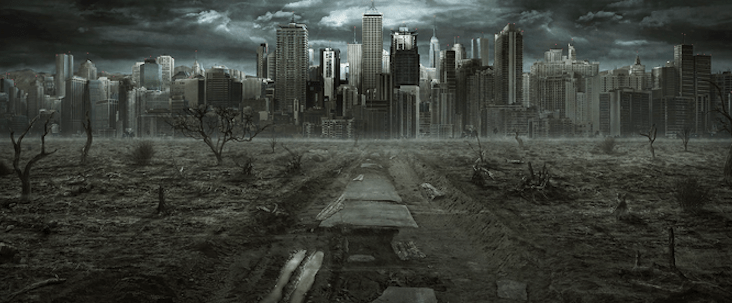
“Every record has been destroyed or falsified, every book rewritten, every picture has been repainted, every statue and street building has been renamed, every date has been altered. And the process is continuing day by day and minute by minute. History has stopped. Nothing exists except an endless present in which the Party is always right.” Orwell, 1984
“But I don’t want comfort. I want God, I want poetry, I want real danger, I want freedom, I want goodness. I want sin.” Huxley, Brave New World
I recently read both George Orwell’s 1984 and Aldous Huxley’s Brave New World. Both books are dystopian novels set under totalitarian governments, both offer prophetic warnings to each generation, and both are about truth in times of mass deceit. But that’s about where the similarities end.
In 1984 the ultimate aim of the state is power. To get that power, the Party –typified by Big Brother– totally controls the people. There were screens in every room that transmitted video and audio to the state, constant surveillance. Any suspicious activity was immediately looked into, even the slightest sign of disloyalty was sure to be picked up on and punished by banishment or death. There was never enough to eat and necessities were dear, yet Big Brother through the Ministry of Plenty constantly pushed the narrative that never in history had there been so much overproduction of goods. The Ministry of Truth, where Winston (the protagonist) worked, had a mission; destroy any documentation that contradicted the Party, rewrite the past, and erase any evidence of the destruction. There was also the ministry of love; whose job it was to insure that any who showed a lack of love for Big Brother were tortured, and that the land would always be in a state of war and thus in a state of fear. Two plus two equals five if the Party says so, and you must believe that it does, and forget it ever equaled four, doublethink.
In Brave New World the state also has complete control. In contrast, its dictatorship comes not by surveillance and the Thought Police, but through giving its citizens pleasure. Everything is controlled by the state; from cradle to grave– literally. No one has to think, life is easy, life is good. You work your job that you were predestined to fill. Promiscuity is seen as virtue, you can sleep around all you want so long as you aren’t with one person too long. No responsibilities outside of your specialty, no family, no solitude. There is community recreational golf. The feelies, like movies only better, and soma, a drug that gives instant gratification and pleasure. You can’t read Shakespeare because no one could, or should, understand it. Shakespeare wrote of trial and temptation, of virtue and vice, of deep loves and hates –all of this was foreign to the men and women living in the Brave New World. They worshiped Henry Ford, who they accredited with making their extreme materialistic assembly line world possible. They had Fordsday celebrations, community worship orgies in the name of the great developer of mass production with the express purpose to make all one. And this is how the world controllers achieved world domination.
1984 feels like a journey to North Korea mixed with a vision of the radical left. Brave new world is less dark but more deadly, sort of like the America I’ve grown up in, every man a slave to pleasure and therefore a worshiper of the pleasure giver.
At the heart of both novels is worship to the state. In 1984 it’s done by forcing the individual to believe the narrative of the party and bow to its Savior, Big Brother. In Brave New World it’s done by granting happiness at the expense of individual liberty.
 Reflective Wanderer